 |
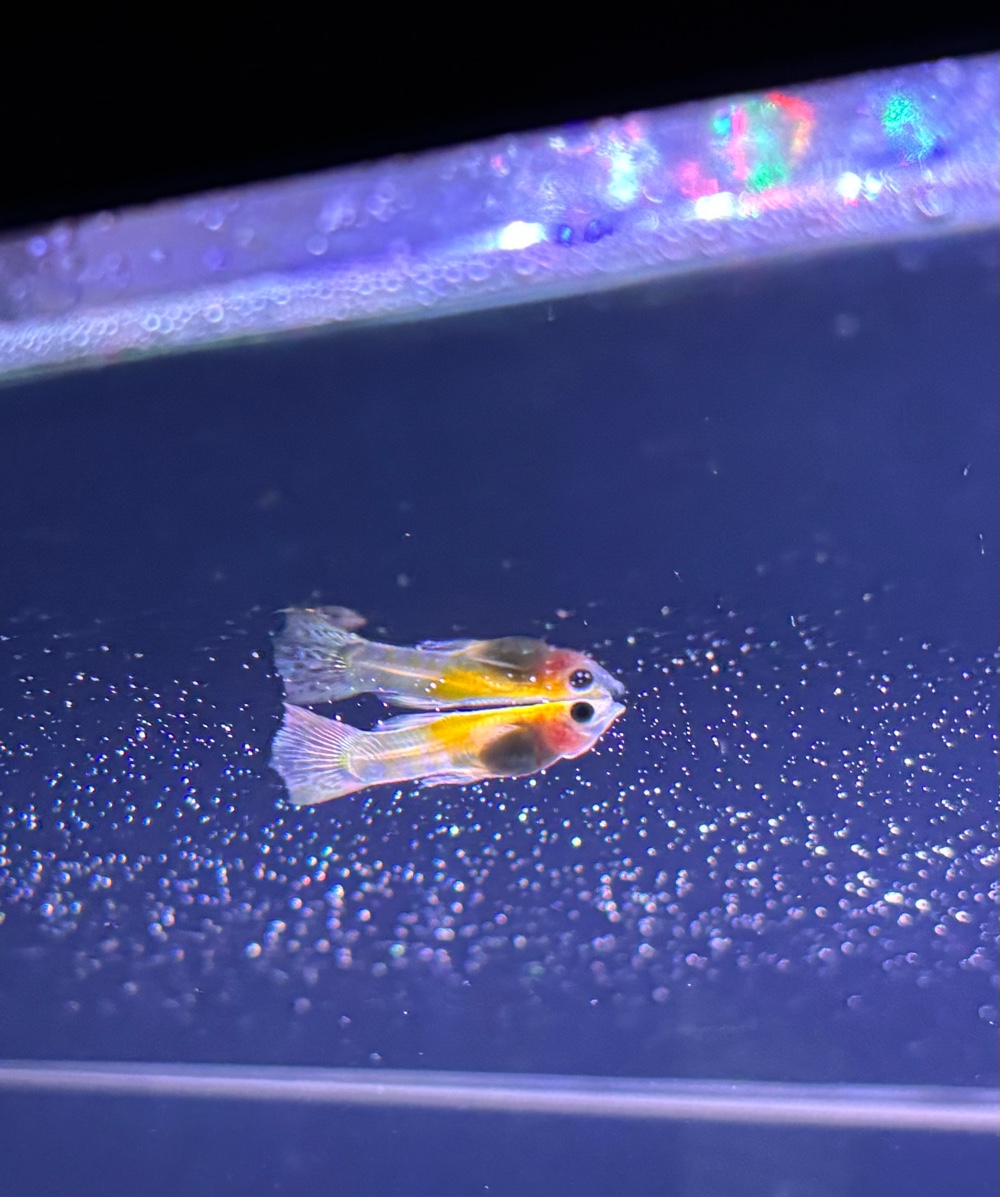 |
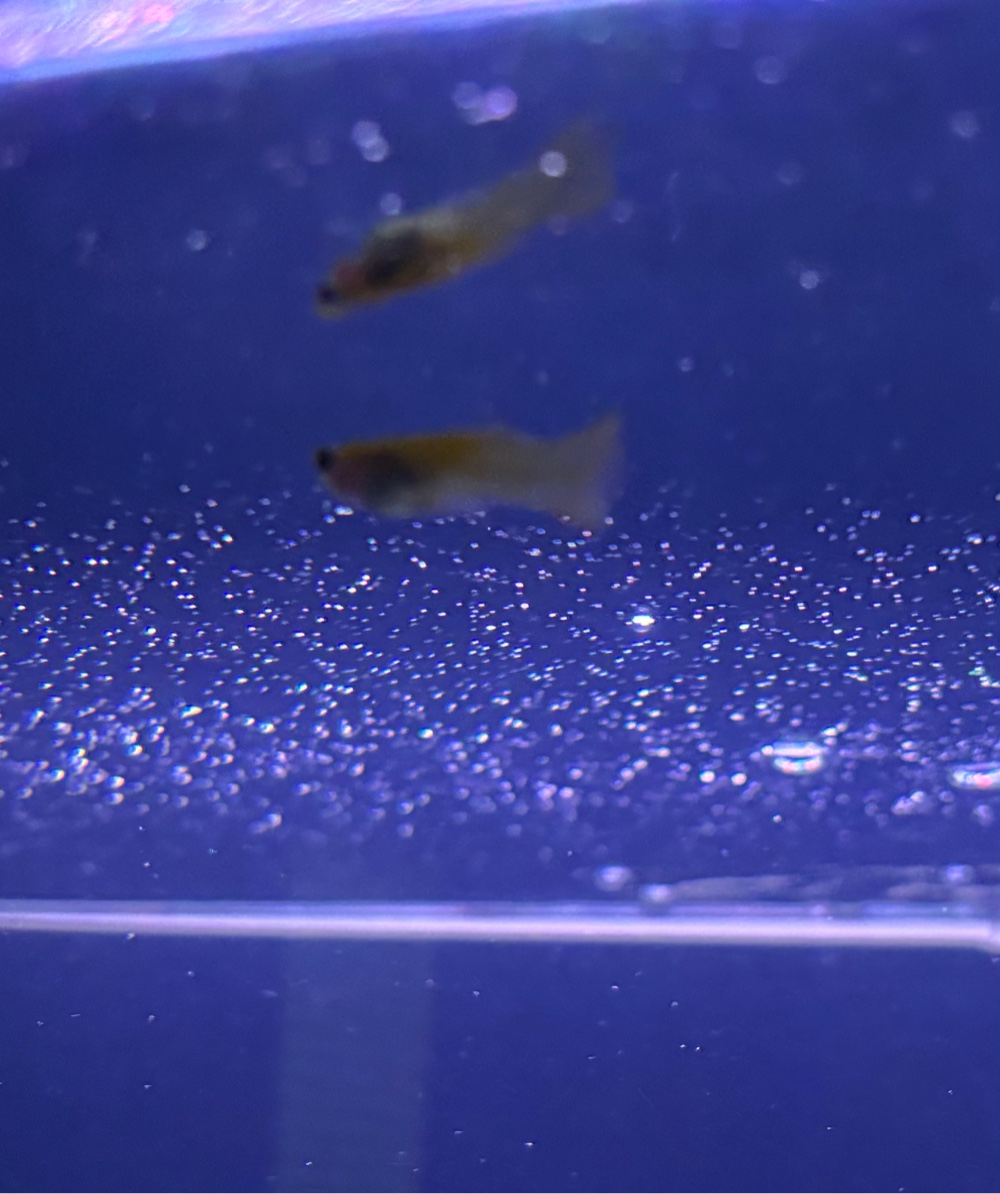
Based on the photos, you have a beautiful livebearer that shows strong characteristics of an Endler’s Livebearer (Poecilia wingei) or a high-percentage Endler-Guppy hybrid.
Here is a breakdown of what your fish's features tell us about them:
1. Sex: Female
This fish is definitively female. You can tell by a few distinct anatomical markers:
• The Gravid Spot: The prominent dark, round spot toward the back of her belly is the gravid spot. This is actually internal tissue showing through her translucent skin, and it darkens significantly when she is pregnant.
• Anal Fin Shape: Her anal fin (the small fin on the underside, just before the tail) is fan-shaped and rounded. Males have a modified, rod-like anal fin called a gonopodium used for mating.
• Body Shape: She has the classic deeper, more rounded, and robust body shape characteristic of female livebearers, compared to the sleek, streamlined shape of males.
2. Physical Characteristics & Coloration
While female wild-type guppies and Endlers are traditionally a plain, translucent silvery-gray, your fish has some lovely, distinct traits:
• Gold/Yellow Cores: She displays a beautiful, warm golden-yellow coloration along the midsection of her body.
• Translucent and Iridescent Highlights: Her head and tail areas are quite clear, with just a hint of fine patterning or iridescence on the tail fin when the light hits it just right.
• Size and Structure: Her sleek, slightly smaller structure relative to a standard fancy guppy strongly points to her Endler heritage. Endlers are close cousins to standard guppies but tend to stay smaller and more compact.
3. Behavior and Care Notes
• Potential Fry on the Way: Because she is a female livebearer housed with males, that prominent gravid spot means there is a very high probability she is pregnant (or will be soon!). Livebearers can store sperm for months, producing multiple batches of fry from a single mating.
• Activity Level: Endler genetics usually bring a lot of high-energy, curious behavior to a tank. They love exploring plants, swimming in gentle currents, and grazing on biofilm or algae between meals.
Comments
Post a Comment
I love to hear back from my readers, please leave a message below: