 |
 |
Here is a guide to help you successfully raise the next generation.
1. The Waiting Game
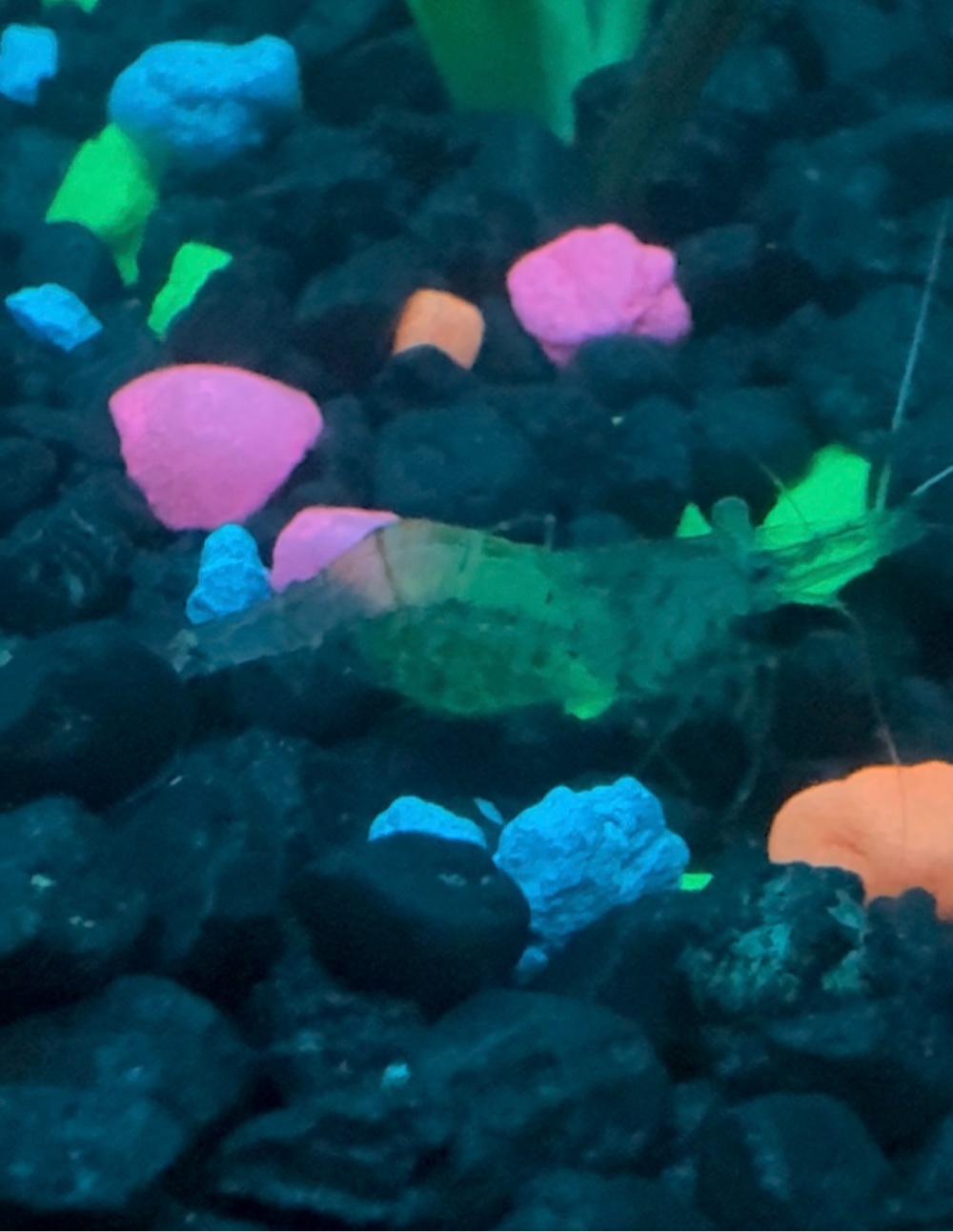
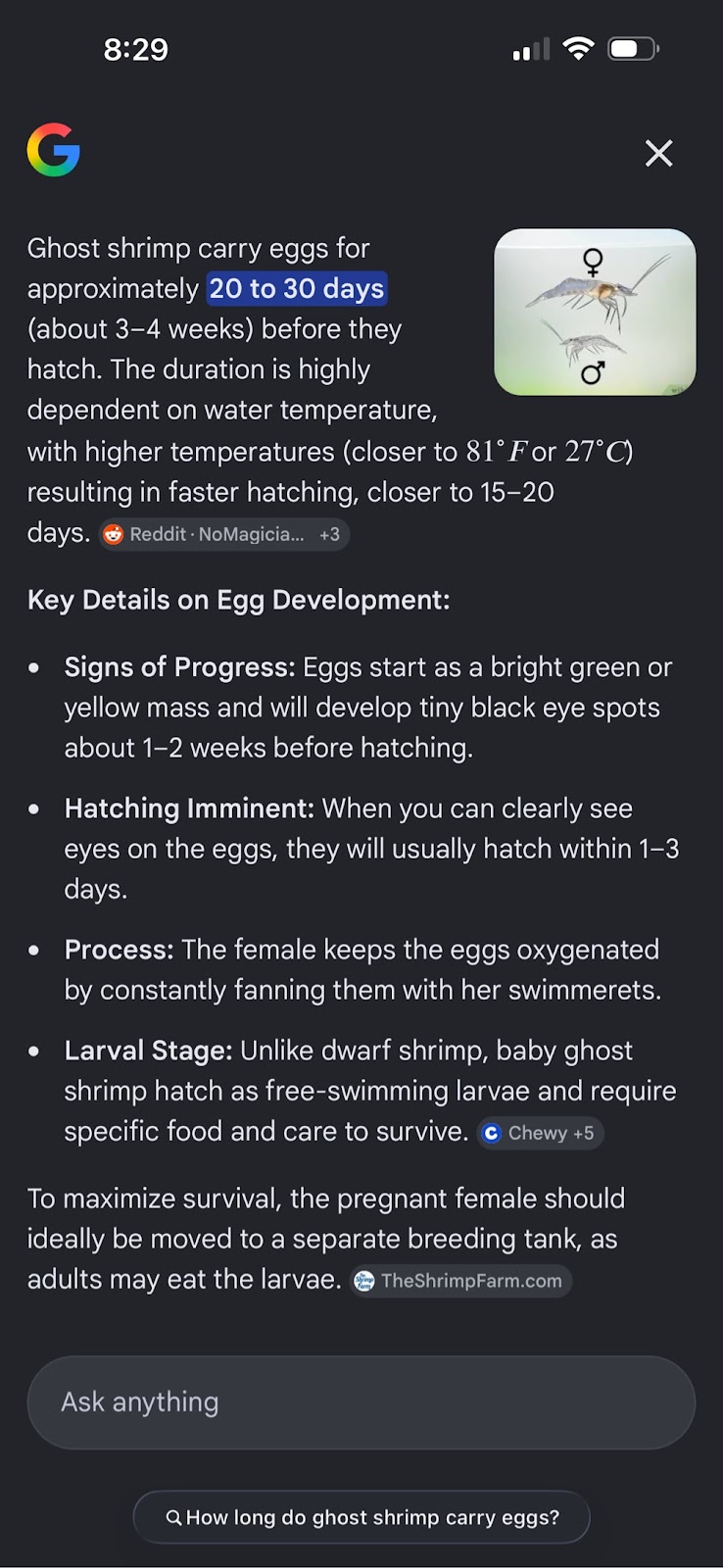
A ghost shrimp will carry her eggs for about 3 to 4 weeks.
• The Eggs: They start as small green or yellowish dots. As they get closer to hatching, you might be able to see tiny dark spots inside the eggs—those are the babies' eyes!
• The Hatch: Ghost shrimp don't hatch as miniature adults; they hatch as planktonic larvae, meaning they float in the water column and cannot swim well for the first few days.
2. Setup a Nursery
If you keep the mother in a community tank with fish (like Cichlids or Endlers), the larvae will likely be eaten almost immediately after hatching.
• Separate Tank: If possible, move the berried female to a small, dedicated 5 or 10-gallon tank with the same water from the main aquarium.
• Sponge Filters only: Standard power filters will suck up the larvae. Use a sponge filter to keep the water clean and safe.
• Live Plants: Floating plants (like Java Moss or Duckweed) provide great hiding spots and grow "biofilm," which is the babies' primary food source.
3. Feeding the Larvae
Since the babies are microscopic when they hatch, they cannot eat standard shrimp pellets.
• First Few Days: They need specialized food like Infusoria, liquifry, or very finely powdered spirulina.
• After a Week: Once they look more like tiny shrimp and start crawling on surfaces, you can transition them to crushed algae wafers or baby brine shrimp.
4. Water Quality is Key
Baby shrimp are extremely sensitive to shifts in water chemistry.
• Stability: Avoid large water changes. Stick to small, frequent changes (about 10%) to keep the nitrates low without shocking their systems.
• Temperature: Keep the water consistent, ideally between 72°F and 82°F.
5. Moving the Mother Back
Once the eggs have hatched and you see the tiny larvae floating, move the mother back to the main tank. While ghost shrimp aren't as aggressive as some species, they have been known to eat their own young if food is scarce.
Quick Tip: If you can’t set up a separate tank, adding a very dense "jungle" of Java Moss to a corner of your current tank will give a few lucky survivors a fighting chance to hide until they are big enough to not be a snack!
 |
More links:
Comments
Post a Comment
I love to hear back from my readers, please leave a message below: