 |
How exciting! Getting those first few batches of fry is always a thrilling milestone.
Because this is their first time around with you, here is a quick roadmap of what to expect over the next few days to help everything go as smoothly as possible:
1. Delivery Dynamics
• The Delivery Window: Once labor actually starts, it can take anywhere from 2 to 6 hours for a female to release all of her fry, depending on her age and the size of the brood. First-time batches are usually a bit smaller—often around 10 to 30 fry—so she might finish up on the quicker side.
• The "Drop": The fry will pop out curled into a tiny ball, sink slightly, and then quickly unfurl to head for the nearest surface or hiding spot.
2. Immediate Post-Delivery Steps
• Separate the Moms: As soon as you notice a female has finished delivering (her belly will look dramatically deflated and deflated), move her back to the main tank. Guppies don't have maternal instincts, and once the stress of labor wears off, those tiny moving fry look like a snack.
• Give Mom a Treat: Labor takes a lot out of them. Feeding the mothers some high-quality food (like brine shrimp or high-protein flakes) once they are back in the main tank helps them recover quickly.
3. Caring for the Newborns
• First Feeding: The fry won't need to eat for the first 24 to 48 hours because they are still absorbing their yolk sacs. Once they start actively swimming around looking for food, you can feed them baby brine shrimp, hikari first bites, or simply take your regular high-quality flakes and crush them into a super-fine, dust-like powder between your fingers.
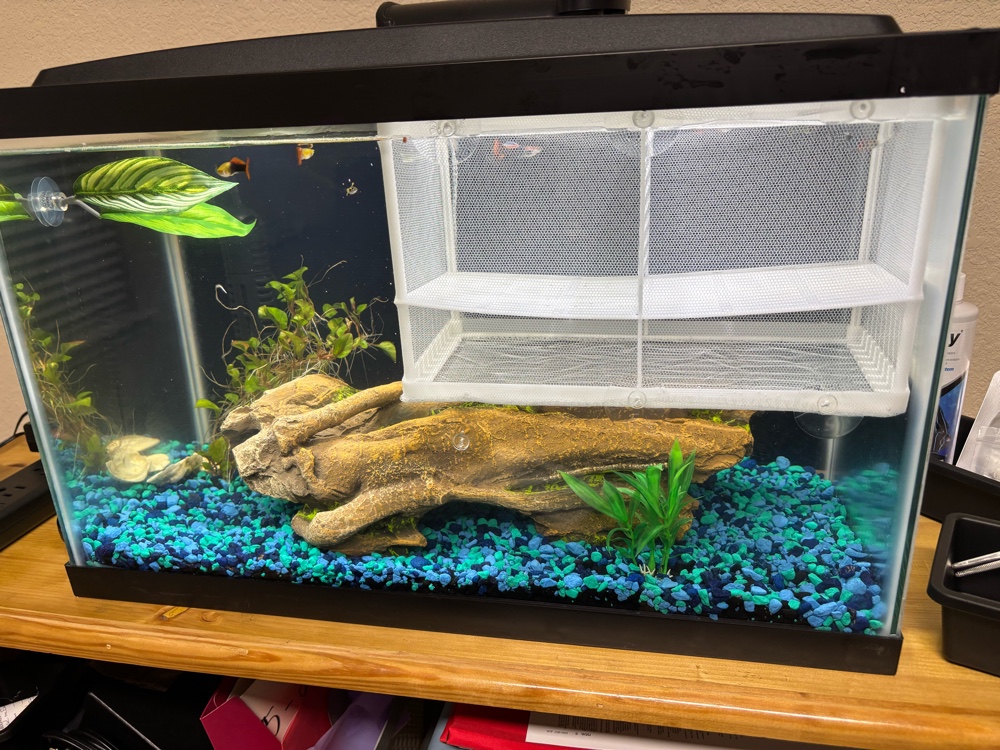
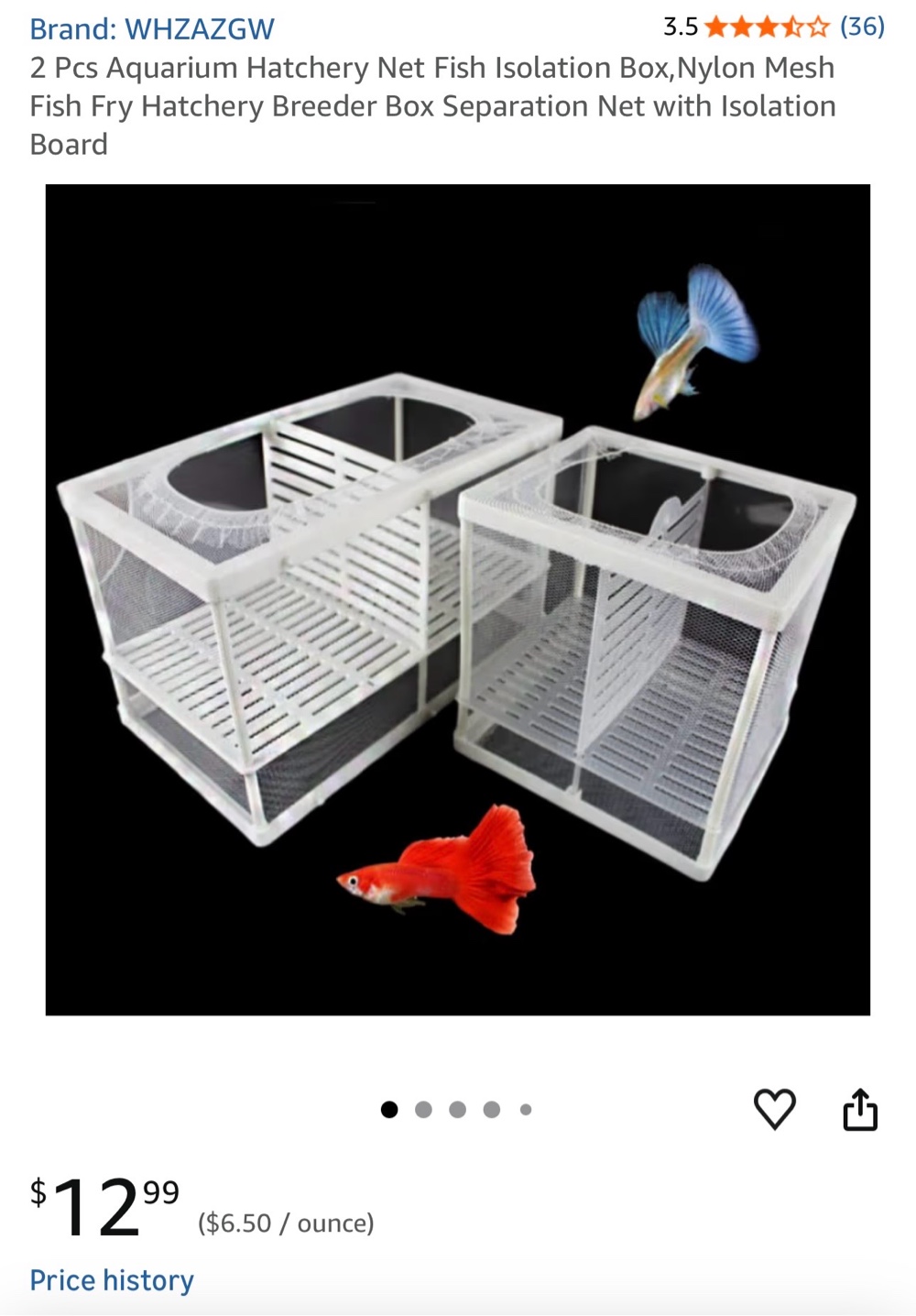
• Water Quality: Tiny fry are sensitive to water changes, but they also need clean water to grow. Since they are in a breeder net inside the main tank, they get the benefit of your main filtration, but just make sure no leftover food settles and rots on the bottom of the mesh.
Keep a close eye on their bellies over the next 48 hours for that boxy, sharp-angled look underneath their heads!
 |
 |
 |
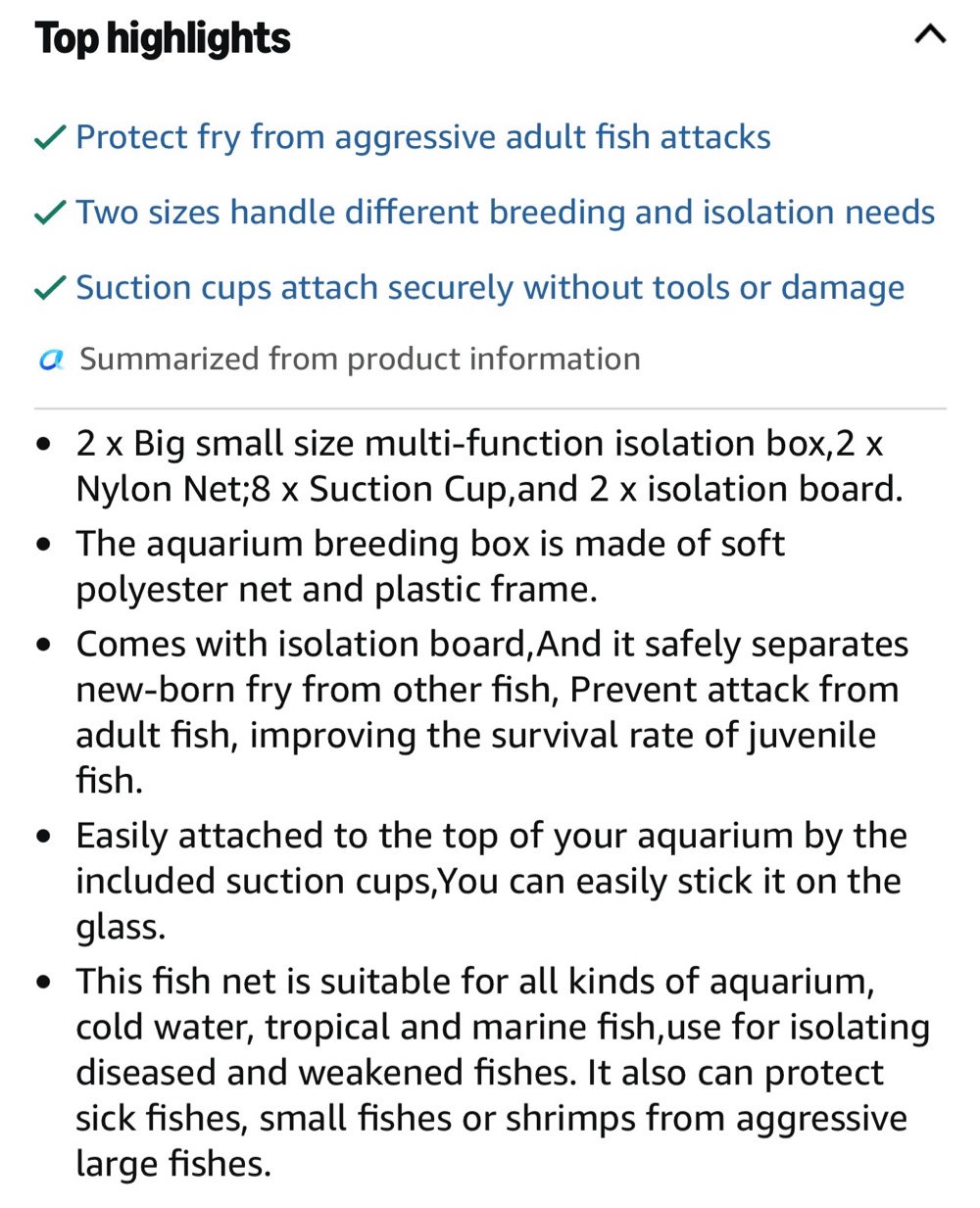
No worries at all! The great news is that because you are using a breeder net, you have a built-in safety cushion. The fry can comfortably stay right there in that net for the first 2 to 3 weeks of their lives.
Since they share the water with your main tank, they get the benefit of your established filtration and stable water parameters without you needing to rush out and set up a whole new aquarium today.
As they start growing, here are the two main paths you can take:
Option A: The "Community Tank" Release (Easiest)
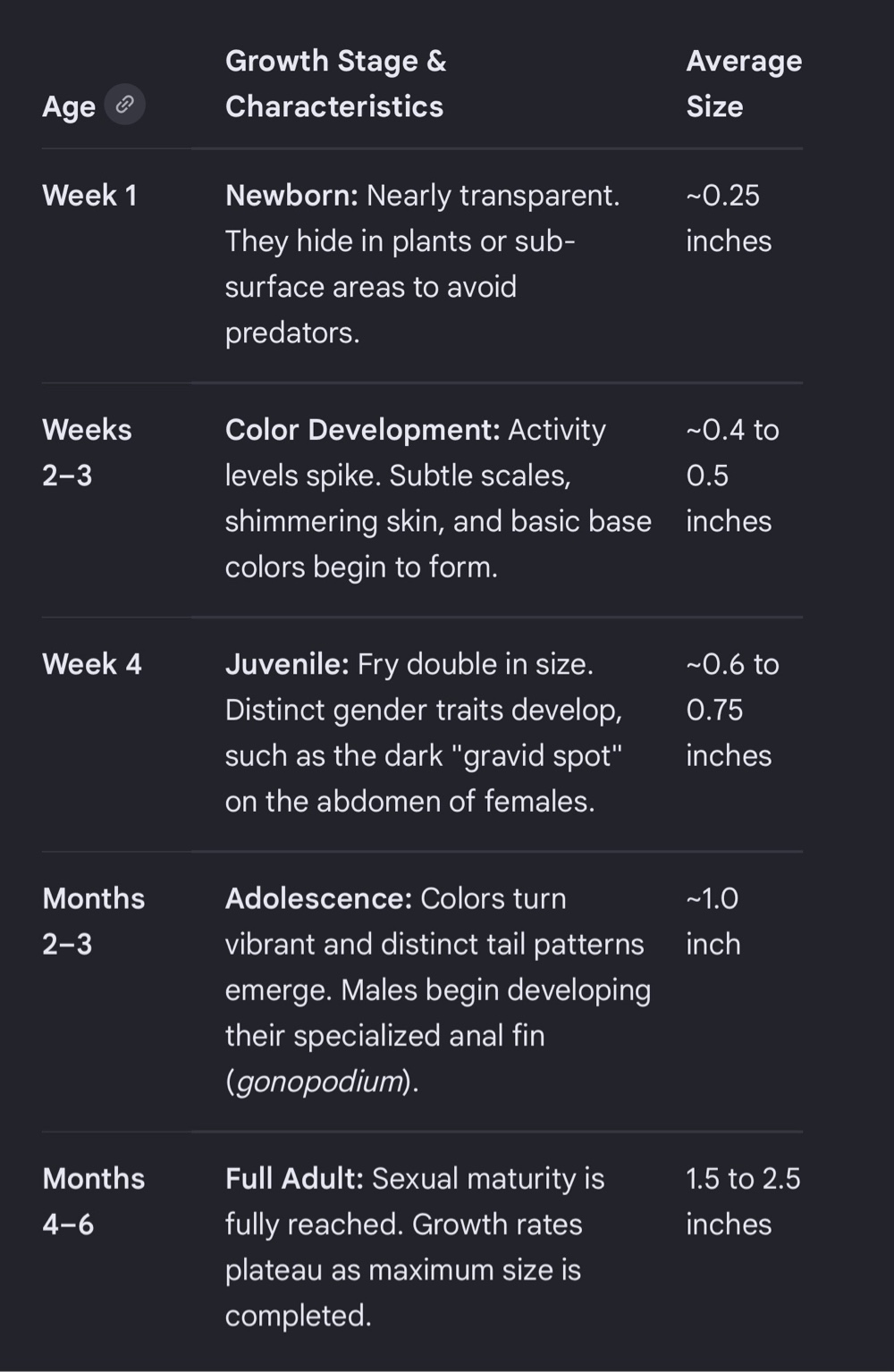
Once the fry grow to about 0.5 inches (usually around the 3 to 4-week mark), they will be too large to fit into the mouths of the adult fish. At that point, you can simply scoop them out of the net and release them right into the main tank.
• Tip for success: This works beautifully if you have some live or fake plants (like Java Moss, Guppy Grass, or dense plastic decorations) where they can hang out and feel secure while they finish growing.
Option B: A Dedicated Grow-Out Tank (Best for Maximum Survival)
If you fall in love with watching them grow and want to ensure every single one survives, you can eventually set up a small, simple 5 or 10-gallon grow-out tank.
• Tip for success: You’d just need a simple sponge filter (which is safe and won't suck up tiny fish) and a small heater. This keeps them separated until they are fully colorful adults.
For now, you don't have to change a thing. Just keep your eyes on the moms, get some flake food crushed up into a fine powder, and enjoy watching the miracle of livebearers!
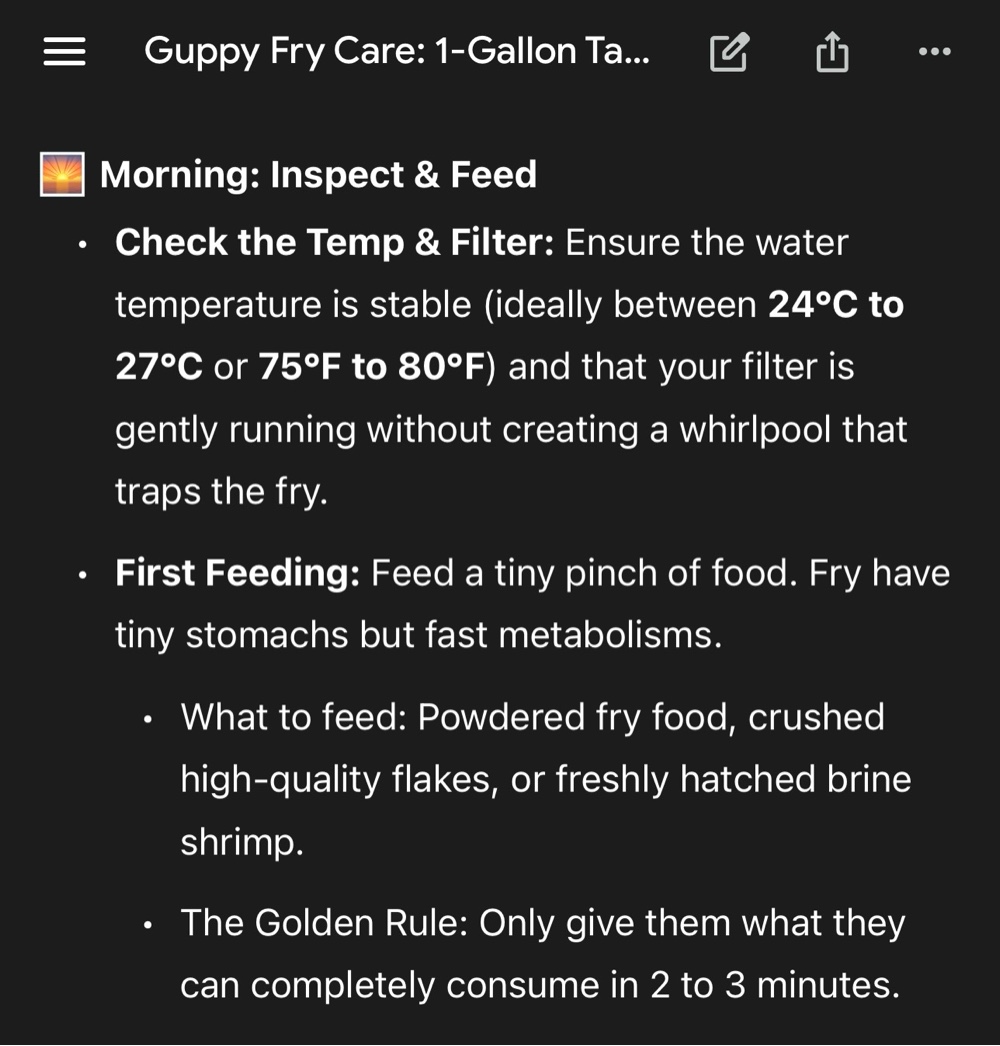
- Frequent Feedings: Feed them crushed flakes, baby brine shrimp, or fry-specific food 3–5 times a day.
- Warm Water: Keeping the fry tank around 78–80°F (25–27°C) speeds up their metabolism and growth rate.
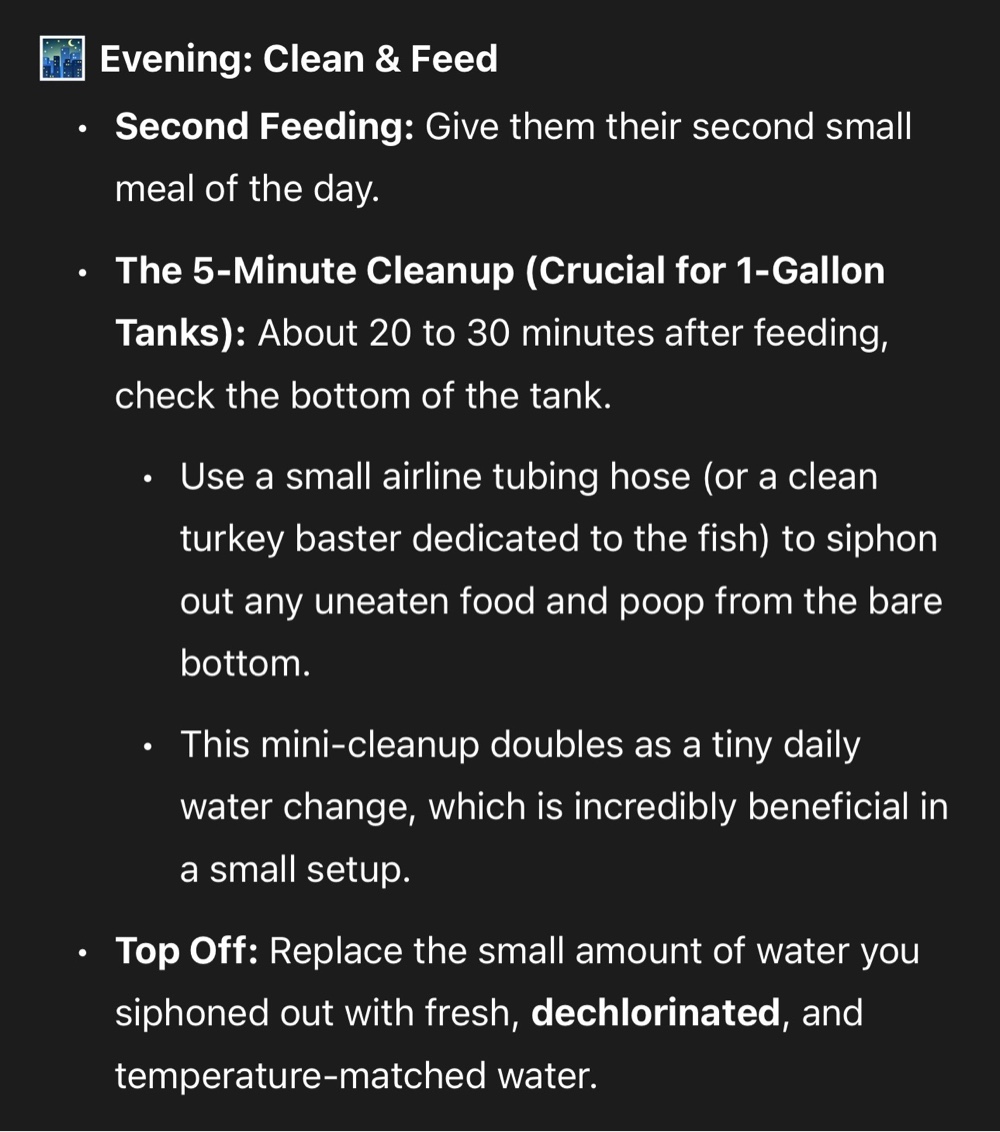
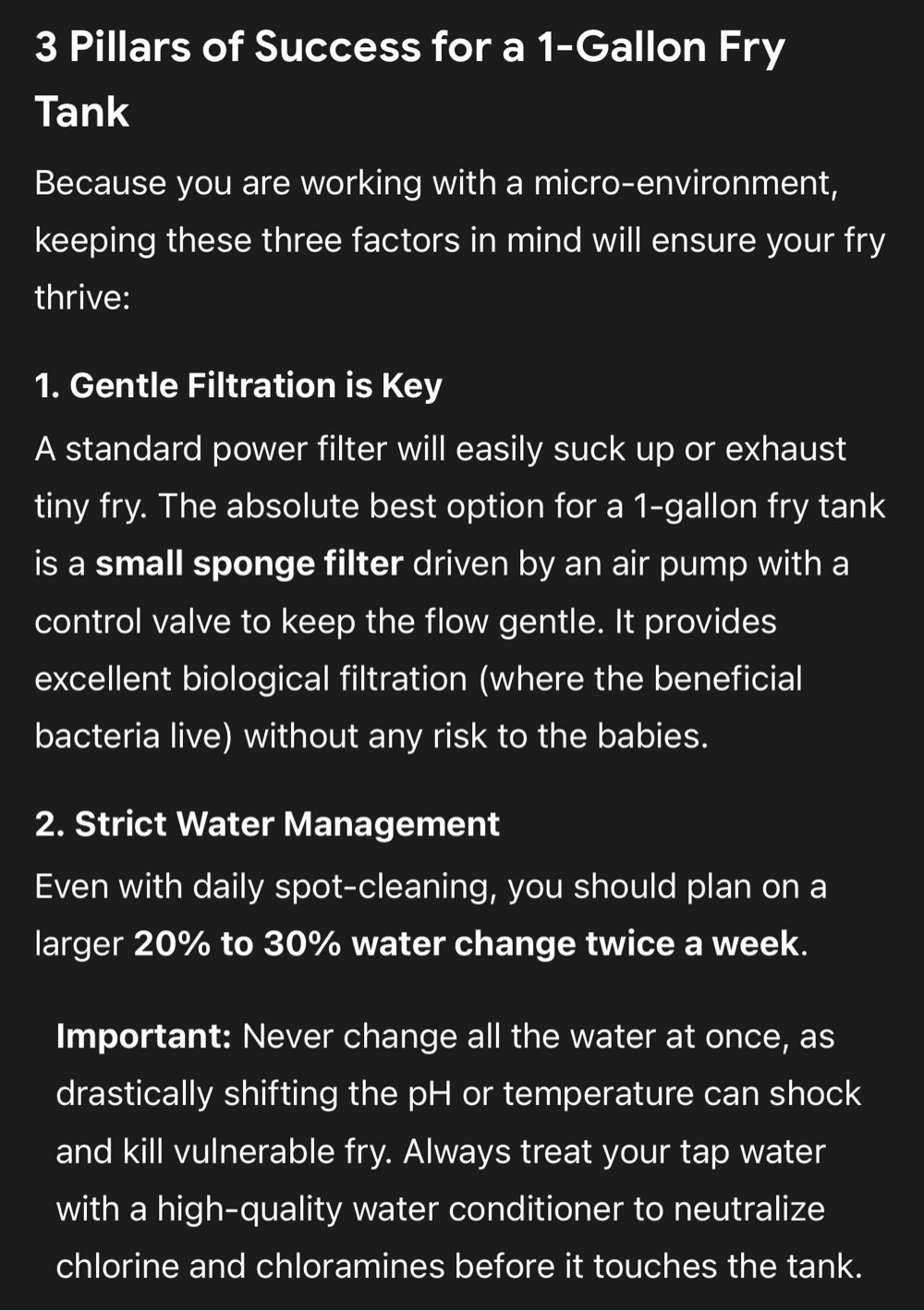
- Clean Tank/Water Changes: Poor water quality or cramped breeder boxes will stunt their growth.
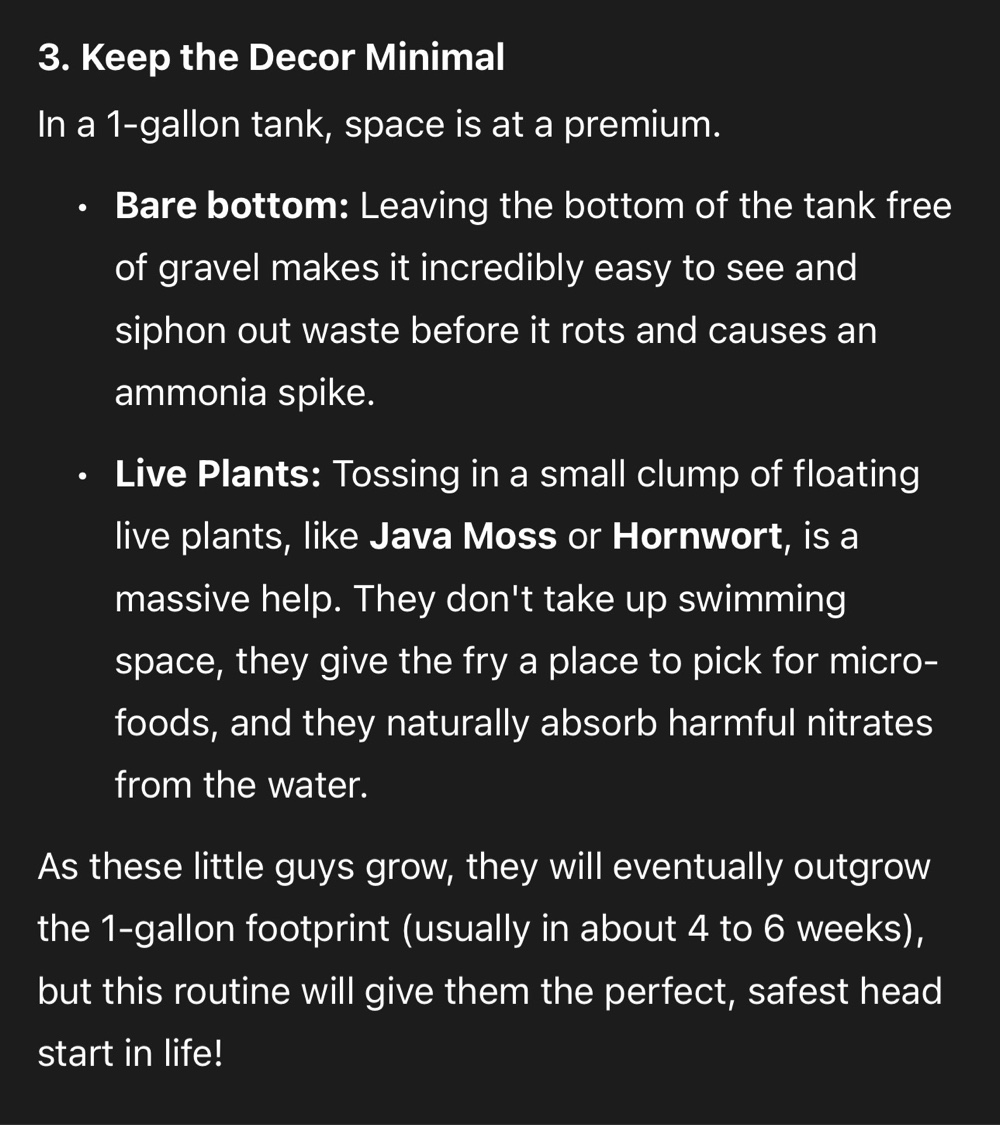
- Size Check: By week four, they typically look like miniature adults. Wait until they are at least 0.5 to 1 inch long before releasing them.
- Test the Waters: If you are unsure, release just one of the largest fry as a test and observe how the other community fish react for a few hours. [1]
- Provide Hiding Spots: Make sure your main tank has plenty of floating or dense live plants where the young guppies can retreat while they adjust. [1]
- Feeding the Adults: Feed your adult community fish right before you introduce the fry so they are less interested in hunting.
 |
 |
 |
 |
 |
Comments
Post a Comment
I love to hear back from my readers, please leave a message below: