


 |
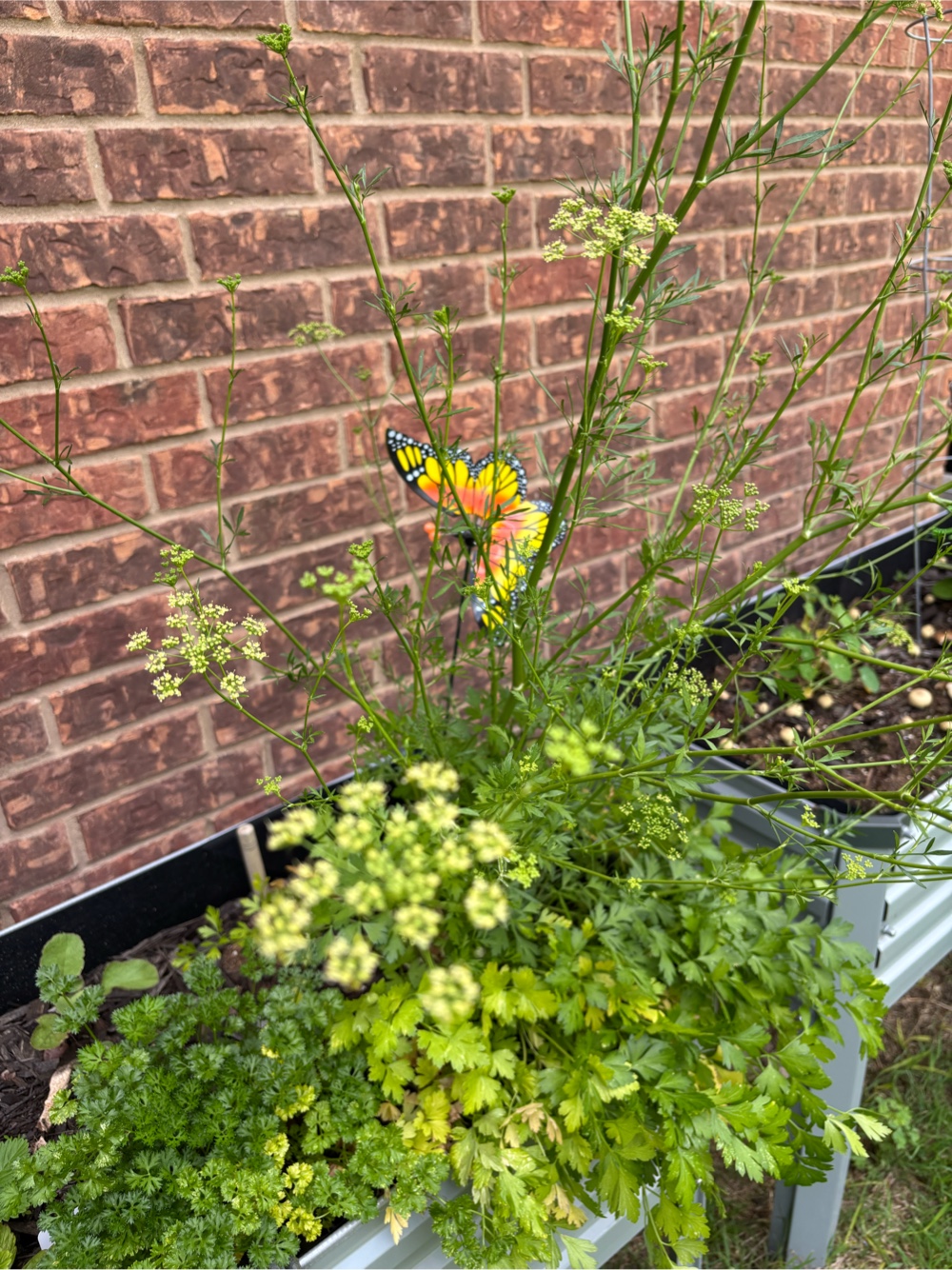
Happy flat-leaf (and a bit of curly) parsley that has decided it's time to move on to its next phase of life: bolting.
When parsley sends up those tall, thick stalks with tiny yellow-green flower clusters (umbels), it is shifting its energy from growing delicious leaves to producing seeds.
Because parsley is a biennial, this is completely natural once the weather warms up in its second year. However, it does change how you use it. Here are your best options for what to do next, depending on what you want out of your garden right now:
Option 1: Let it Bloom for the Pollinators & Predators
If you aren't desperate for kitchen parsley, leaving it alone is highly beneficial.
• Beneficial Insects: Those tiny flowers are an absolute magnet for local pollinators, tiny predatory wasps (the good kind that eat garden pests), and hoverflies.
• Swallowtail Butterflies: Parsley is a preferred host plant for Black Swallowtail caterpillars. If you leave it, you might find some beautiful striped caterpillars munching on the frilly leaves soon!
• Collect the Seeds: Once the flowers dry out, you can harvest the coriander-like seeds to plant for a brand-new crop of parsley next season.
Option 2: Harvest the Remaining Leaves Now
Once the plant bolts, the flavor of the leaves changes.
• Taste Test: Nibble a leaf from the bottom of the plant. If it still tastes good to you, harvest all the remaining lower foliage immediately.
• Preserve It: Because bolted parsley can taste a bit more bitter or woodier than usual, it’s best used in cooked dishes rather than as a fresh garnish. Chop it up and freeze it in olive oil or water in an ice cube tray for future soups and sauces.
Option 3: Chop It Back (Temporary Fix)
• You can cut those tall flower stalks all the way down to the base to try and force the plant to focus on leaf production for a little bit longer.
• Note: This only buys you a little time. Once the hormonal shift to bolt happens, the plant will keep trying to flower until its lifecycle is complete.
Option 4: Replace It
If you want tender, mild parsley for fresh summer cooking, it’s time to pull these plants out (or move them to a corner of the yard for the bugs) and plant fresh new starts or seeds in their place.
What's your main goal for this garden bed right now—are you looking to keep cooking with fresh herbs, or are you happy letting nature take its course for the local wildlife?
Comments
Post a Comment
I love to hear back from my readers, please leave a message below: